
What Parliament asked us about relationships for children in care
Jun 03, 2026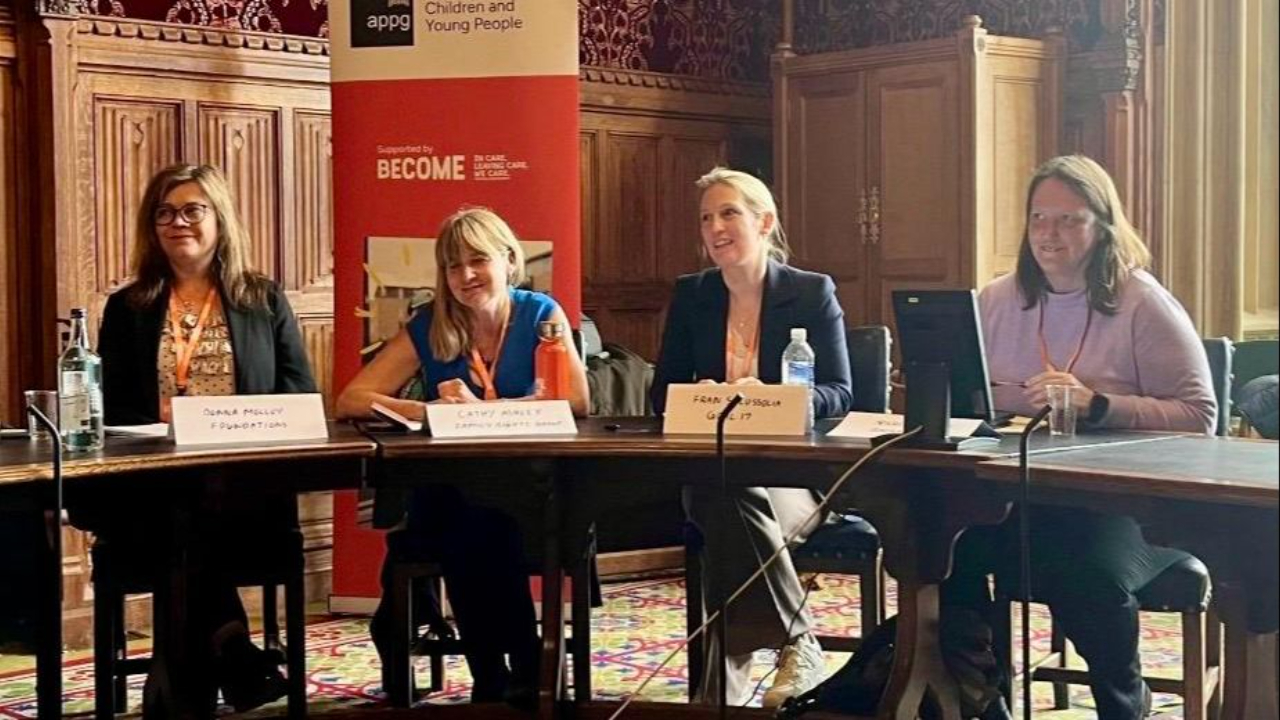
On 20 May, Goal 17 founder and CEO Francesca Salussolia was invited to give evidence to the All-Party Parliamentary Group for Care-Experienced Children and Young People, as part of its ongoing inquiry into how the care system protects and supports children's relationships.
It was the first time Goal 17's work — and the dataset we have been building through Wowment.ai — has been formally placed on the parliamentary record. We wanted to share what was discussed, what we contributed, and where we think the conversation goes next.
The inquiry
The APPG, co-chaired by Jess Asato MP and Darren Paffey MP, has been examining a question that sits at the heart of the care system but rarely sits at the heart of how it is commissioned: how does the care system actually protect and support the relationships that matter most to children?
The inquiry recognises something the sector has long known but struggled to act on. Children in care often experience high levels of instability — moves between placements, changes in social worker, the loss of contact with family and friends. Each of these disruptions can strain or break the very relationships that research consistently shows are the strongest predictors of long-term outcomes.
The session on 20 May focused specifically on "Other Supportive Adults" — the role of mentors, befrienders, Independent Visitors, and other trusted adults in supporting children's connections.
The panel
Francesca was invited to give evidence alongside three of the sector's most respected voices:
- Cathy Ashley — Chief Executive, Family Rights Group, whose Lifelong Links programme is now backed by significant DfE investment for local authority implementation
- Donna Molloy OBE — Deputy CEO, Foundations, the national What Works Centre for Children and Families
- Nicola Smith — Senior Policy Adviser, Barnardo's
Each organisation came at the question of relationships from a different angle. The Family Rights Group through the reconnection of family networks. Foundations through evidence quality and what should be funded. Barnardo's through national scale and policy reach. Goal17 through the dataset we have been building on what actually happens inside volunteer mentoring relationships at scale.
What we contributed
Goal 17 has spent the last year capturing more than 33,000 anonymised interactions between volunteer mentors and care-experienced young people through Wowment — our patent-pending communication platform that connects mentors and mentees on WhatsApp without either party exchanging contact details, with AI running quietly in the background to flag safeguarding concerns and relationship-health signals.
This dataset is, to our knowledge, the largest of its kind in the UK. And it is starting to tell the sector something that has been difficult to evidence before: what mentoring relationships actually look like, day to day, in the lives of children in care.
The picture is more nuanced than the binary of "did the programme work."
We are seeing engagement rise — not fall — during periods of disruption. When everything else changes, the mentor is the constant young people reach for. We are seeing the smallest moments matter most: a message before an exam, a check-in after a difficult week, someone remembering an important date. These are signals that don't easily fit traditional performance frameworks, but they are where trust is built, and where lasting relationships are formed.
What we heard
What struck us across the panel wasn't where the four organisations differed. It was what we kept returning to.
The care system in the UK is built around process, placements and procedures. But the outcomes everyone in the room cared about turned on something smaller and harder to commission: whether a young person has people in their life who consistently show up.
The question Parliament was exploring wasn't simply how to deliver better services. It was how to create the conditions for more meaningful, lasting relationships — and how the sector, the technology, and the policy environment can support more of them to happen.
We think that is the right question. And we think it is the harder one.
What comes next
The day after the inquiry, Goal 17 launched our Department for Education-funded report What Works in Supportive Relationships for Hard to Reach Young People to over 200 sector leaders. It draws on the same evidence base, and represents the strongest independent evidence we have produced so far on what actually builds and sustains these relationships.
For us, the inquiry confirmed a direction we have been moving in for some time. The challenge ahead isn't proving that relationships matter — Parliament, the sector, and the evidence base all now agree that they do.
The challenge is designing the systems, commissioning models and technology that allow more of them to happen.
That is the work we will keep doing.
To read the What Works in Care Leaver Mentoring report, visit https://go.goal17.global/what_works/recording